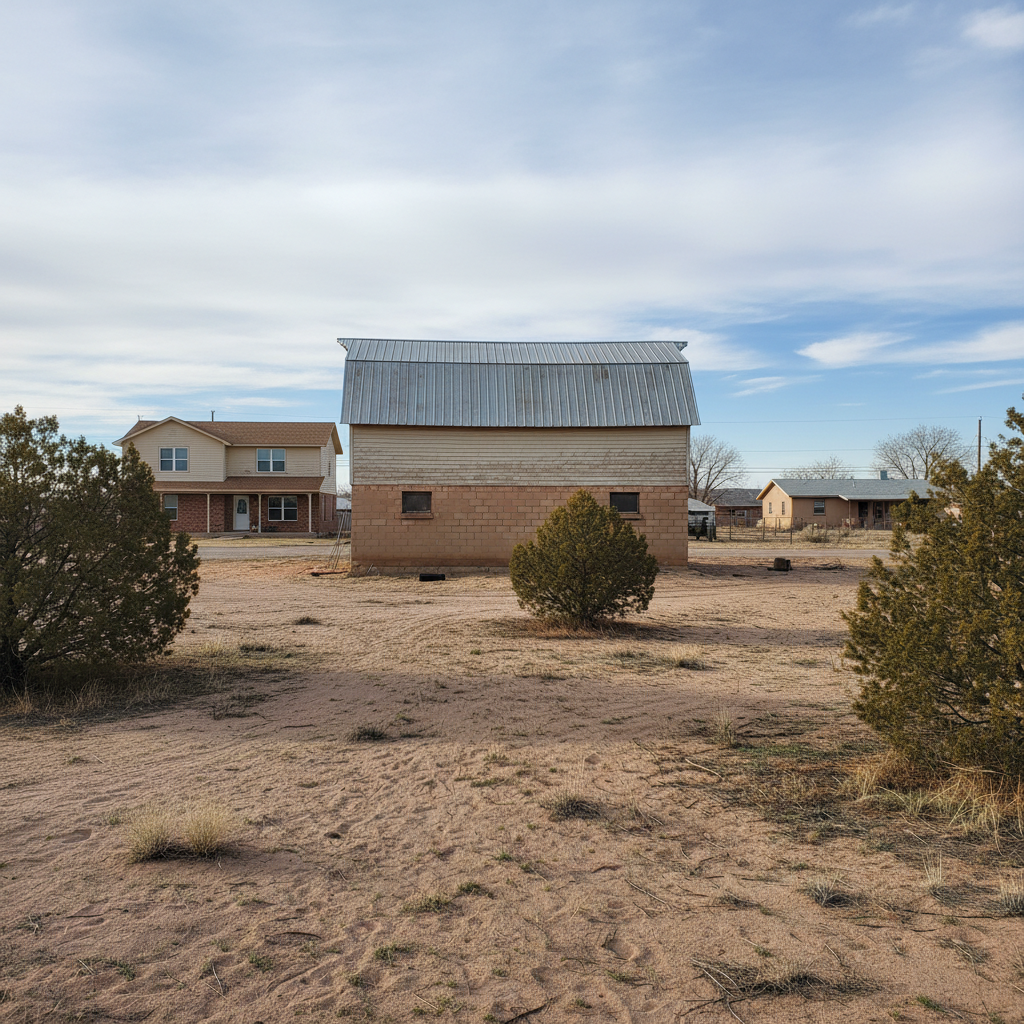
A new roof or a roof repair out here isn't the same job it would be in Albuquerque or El Paso, even though El Paso is twenty minutes down the road. Chaparral sits out on the flat high desert plain of Doña Ana County with almost nothing to break the wind, and that changes what a roof has to survive and what a contractor should be doing differently because of it.
What the desert actually does to a roof
Sun is the big one. A dark asphalt shingle on a south-facing slope here can run 150 to 160 degrees on a July afternoon, and that heat cycles down to near freezing on a December night. That daily swing works the asphalt and the nails loose over the years faster than it would in a milder climate. It's part of why shingle warranties in this region tend to undersell how long a roof actually lasts, and also why a roof that's 18 to 20 years old here is worth a real inspection, not just a glance from the driveway.
Then there's wind. Monsoon season runs roughly July through September, and the storms that come through aren't gentle. You can get 50 to 60 mph gusts ahead of a downpour, sometimes hail with it, and almost no tree cover to slow it down before it hits a roof edge. A shingle rated for 60-70 mph wind resistance (a basic 3-tab) is a different product from an architectural shingle rated for 110-130 mph, and on an open, exposed lot in Chaparral that difference matters more than it would in a sheltered subdivision. Nailing pattern matters just as much as the shingle itself. Six nails per shingle instead of four, placed in the nailing strip and not above it, is the difference between a roof that sheds in the first big gust and one that doesn't.
Flat and low-slope roofs are common here too, especially on additions, carports, and the manufactured and mobile homes that make up a good share of the housing stock in and around Chaparral. Those need their own attention: a modified bitumen or coated roof that's cracking or blistering after fifteen summers of UV exposure isn't a cosmetic issue, it's a leak waiting for the next monsoon downpour to find it.
Licensing, insurance, and how permits actually work here
Chaparral is unincorporated, so building permits for roofing work go through Doña Ana County, not a city building department. For most reroofing jobs that means a permit and an inspection of the decking and the underlayment before shingles go down, and sometimes a final check of flashing and ventilation. A contractor who tells you no permit is needed for a full tear-off and reroof is either wrong or hoping you won't ask questions. Repairs under a certain scope sometimes don't need one, but a full roof replacement generally does, and you want that inspection on record for resale and for insurance claims later.
New Mexico requires roofing contractors to carry a state license through the Construction Industries Division, and you can look that license number up yourself before you sign anything. Ask for proof of liability insurance and workers' comp too. If a worker falls off a two-story roof in July heat and the contractor isn't covered, that liability can land on the homeowner.
What a real estimate looks like
A roof over an average 1,500 square foot single-story house runs around 15 to 17 roofing squares, a square being 100 square feet of roof surface. A written estimate should break that down: how many squares, what decking is underneath (a lot of homes built in the 70s and 80s out here still have older board decking or thin OSB that needs replacing, not just patching), what underlayment goes down, and what shingle or metal product is going on top. It should name the flashing plan around any chimney, vent pipe, or valley, since that's where most leaks actually start, not in the middle of a shingle field.
Get more than one bid if the numbers vary a lot. A gap of a few hundred dollars is normal. A gap of several thousand usually means one bid is skipping decking repair, using a thinner felt instead of synthetic underlayment, or quoting a shingle that isn't rated for the wind exposure this area actually gets.
Red flags worth walking away from
- A door-knocker who showed up right after a hailstorm, with a business card from out of state and no local address.
- Pressure to sign an insurance claim or an assignment of benefits before anyone has inspected the roof.
- A bid with no mention of decking, underlayment, or nailing pattern, just a square footage number and a price.
- A demand for full payment upfront, before any materials are delivered.
- No pulled permit on a full tear-off, or a vague answer when you ask who's doing the inspection.
None of those automatically mean fraud, but together they're the pattern behind most of the complaints homeowners file in this part of the county after a storm. A roofer who's planning to be around next year doesn't need to rush you.
A few questions worth asking before you sign
Ask how many nails per shingle they use and where. Ask what they do differently for a house out here compared to one in town with more wind shelter. Ask how long before you can expect the crew on your roof once materials are ordered, since supply on certain shingle colors or metal panel profiles can run a few weeks out. A contractor who answers those plainly, without reaching for a sales pitch, is usually the one who's actually done the work. That's the kind of detail we go through with every homeowner before Quality Roofing puts a crew on a roof in Chaparral or the towns around it.