Every job below is one we do ourselves across Chaparral.
We strip the roof down to the decking and replace any OSB or plywood that's gone soft before anything new goes on. New underlayment, flashing and ridge vent go in as one system, not patched together from whatever's left of the old roof. Most residential tear-offs take two to four days depending on roof size and whether the decking needs work.
A stain on your ceiling almost never sits directly under the hole, water travels along the decking before it drips through. We trace it back to the actual entry point, usually flashing around a chimney, vent pipe or valley, and fix that instead of just sealing where the drip shows up inside. Sometimes that means pulling a section of shingles back, not just caulking from the attic.
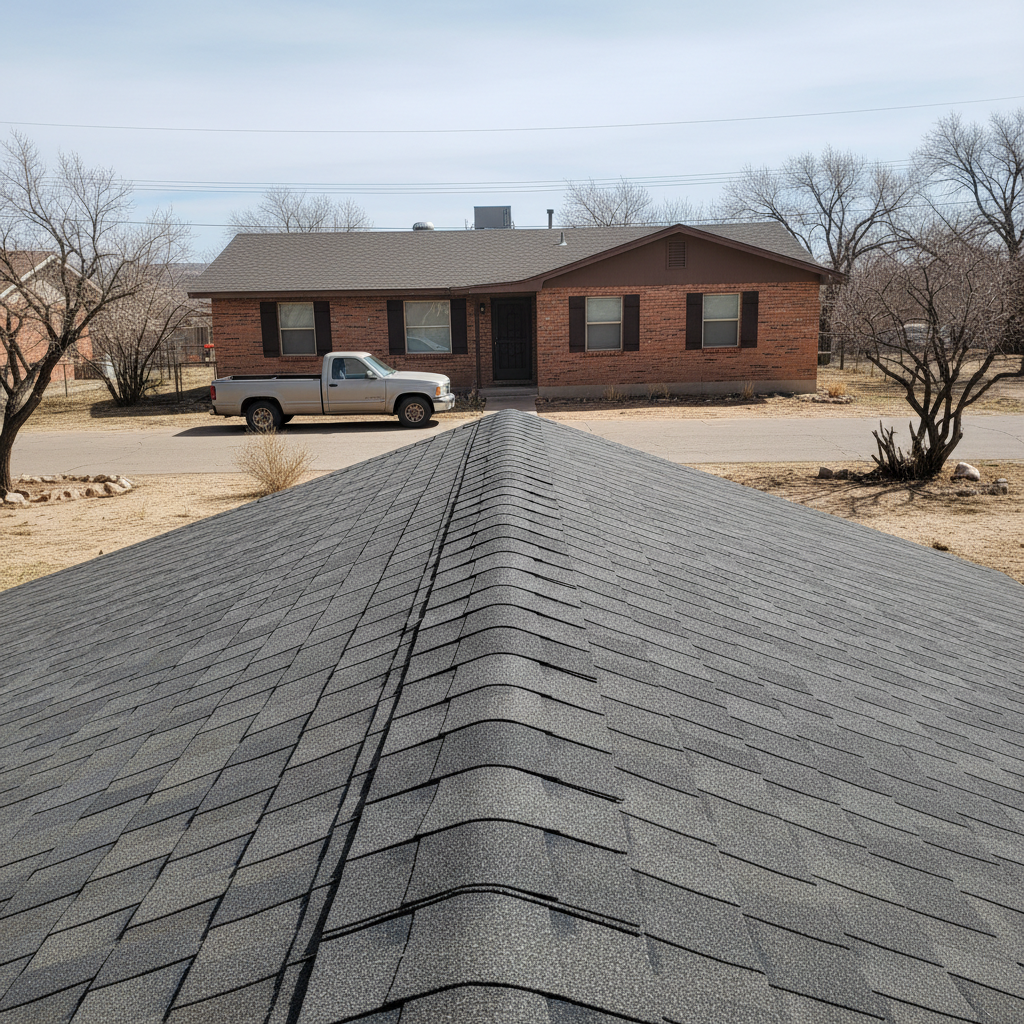
We install architectural shingles with the nailing pattern the manufacturer actually specifies, which matters more than people think when wind gusts come through the valley. Starter strip, drip edge and ridge cap all go in correctly, not skipped to save an hour. Three-tab shingles are cheaper but don't hold up as well out here, and we'll tell you that up front.
Flat and low-slope roofs on additions and older homes in this area are usually TPO, modified bitumen or an old tar and gravel system. We check parapet wall flashing and drain areas first, since that's where ponding water finds a way through a membrane. Small punctures get patched, but a membrane failing in multiple spots usually needs a full recover instead of another patch.
Standing seam metal reflects summer heat better than shingles, which matters when attic temps climb past 140 degrees out here. We use concealed clips instead of exposed fasteners where the budget allows, since exposed screws are the first thing to leak as the gasket ages. Panel lengths get cut to fit the roof, so there are fewer seams for water to find.
We walk the roof, not just look at it from the ladder, checking for granule loss, lifted shingles, soft decking and flashing that's pulled away. You get a written report with photos, useful if you're selling a house or dealing with an insurance claim. Twenty minutes on the roof can catch a problem years before it becomes a ceiling stain.
Gutters take a beating during monsoon season when an inch of rain can fall in under an hour. We set the pitch so water actually runs to the downspout instead of sitting and rusting out the seams, and we check the fascia behind the gutter for rot while we're up there. Clogged gutters are one of the most common reasons we get called out for a leak that isn't really a roof problem at all.
Hail bruises asphalt shingles even when it doesn't punch through, knocking granules loose and leaving soft spots that fail months later. We document the damage with photos an insurance adjuster can actually use, not just a verbal description. If the roof is salvageable we repair the affected slopes, if the damage is spread across the whole roof we'll say so instead of running up a bigger bill.
Elastomeric coatings on a flat or low-slope roof reflect UV instead of absorbing it, which can add years to a membrane that's otherwise sound. We clean and prime the surface first, since coating over dirt or old ponding stains just means it peels early. It's a cheaper option than a full recover if the membrane underneath still has life in it.
Flat commercial roofs take a different kind of abuse, foot traffic from HVAC techs, drains that clog with debris, membrane seams that see more stress than a residential roof ever does. We work with TPO and modified bitumen systems and schedule around your business hours where we can. A leak over a retail floor or a server room doesn't wait, so we treat commercial calls as the priority they are.
Four steps, and no surprises in any of them.
You tell us what you want doing, we look at what is actually there, and we ask the awkward questions early.
In writing, itemised, free. If something might add cost later we flag it now rather than at the end.
Same crew throughout. We cover your floors, keep the dust down and tidy up before we leave each day.
You point out anything you are not happy with and we fix it before the invoice, not after.
Roofing service covers Chaparral and towns within about 50 miles.
Questions that come up once a roofing project is underway.
Describe the problem and we will tell you what it probably is. No obligation.